
APSDP Solutions - Smart Business Solutions | GSTIN: 21AWAPD7777M3ZA
APSDP Solutions - Smart Business Solutions | GSTIN: 21AWAPD7777M3ZA


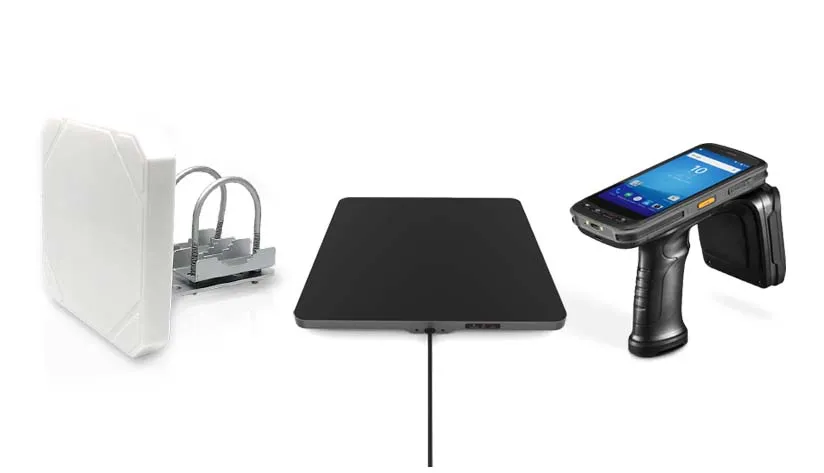
Explore RFID readers, tags, cards, and tracking solutions for access control, inventory management, warehouses, and asset identification. Contact APSDP Solutions in Bhubaneswar, Odisha, for suitable product options and quotations.
APSDP Solutions offers RFID product options and technology solutions for businesses, educational institutions, retail environments, warehouses, and commercial facilities across Odisha. Based in Bhubaneswar, we help organizations explore Radio Frequency Identification (RFID) technology for identifying items, reading compatible tags, managing inventory, tracking assets, and supporting controlled access.
RFID stands for Radio Frequency Identification. It uses radio waves to identify and read information from compatible RFID tags using an RFID reader. Depending on the technology, tags may be read without direct line of sight, making RFID useful for applications where organizations need to identify multiple tagged items or streamline data collection.
The right RFID configuration depends on the application, reading distance, tag type, materials being tagged, operating environment, reader compatibility, software requirements, and the number of items or users involved.
RFID readers communicate with compatible tags and capture the information needed for a particular application. The available reader types include fixed readers, handheld readers, desktop readers, and access-control readers.
The appropriate reader depends on the RFID frequency, tag protocol, required reading range, antenna configuration, connectivity, and intended use.
Ultra-High Frequency (UHF) RFID readers are used in applications such as warehouse inventory, asset identification, logistics, stock counting, and selected supply-chain operations.
UHF systems can support the reading of multiple compatible tags within a suitable reading zone. Actual performance depends on the reader, antennas, tags, installation, surrounding materials, and environmental conditions.
Handheld RFID readers allow users to move through a facility and scan compatible RFID tags. They can be considered for inventory audits, warehouse stock verification, asset checks, and mobile identification tasks.
Before selection, confirm supported RFID standards, operating frequency, battery life, connectivity, data export, software compatibility, and the intended working environment.
RFID tags and labels store identifying information that can be read by compatible RFID equipment. Different designs are available for different objects, surfaces, environmental conditions, and tracking requirements.
Depending on the application, RFID tags may be used for cartons, products, equipment, reusable containers, inventory, and other assets. Tag selection should account for size, mounting method, durability, surface material, and reader compatibility.
RFID cards and compatible readers can support employee identification, door access control, and other credential-based applications.
Credential technologies are not universally interchangeable. Confirm the card frequency, communication protocol, reader compatibility, and controller requirements before purchasing or integrating equipment.
Fixed RFID readers and compatible antennas can be installed at selected reading points, such as warehouse zones, inventory stations, or designated movement checkpoints.
The number and placement of antennas depend on the reading area, item movement, tag orientation, required coverage, and environmental conditions. A site assessment or application trial may be appropriate for projects with demanding read-performance requirements.
RFID-based inventory and asset tracking combines compatible tags, readers, and software to identify tagged items and capture relevant data.
Depending on the implementation, organizations may use RFID to support stock verification, equipment registers, inventory audits, item identification, and movement records. Software configuration and integration determine how this data is stored, displayed, and used.
Identify tagged products and support stock-counting workflows in warehouses, stockrooms, distribution facilities, and retail environments.
Use compatible RFID readers and tags to support item identification, inventory verification, and selected movement-tracking processes.
Label compatible equipment and assets to help maintain identification records and support periodic audits.
Use compatible RFID credentials and access readers for controlled entry to offices, staff areas, and other designated locations.
Explore RFID for item identification, inventory visibility, and selected product-tracking workflows. Retail anti-theft applications may require a different RFID or EAS configuration.
Use suitable RFID applications for asset identification, equipment management, library workflows, or access control, subject to the selected system and institutional requirements.
Consider RFID for selected work-in-progress identification, component tracking, inventory processes, and asset-management applications.
Contactless identification: Read compatible tags without requiring physical contact.
Reduced manual scanning: Suitable systems can support more efficient identification and stock-counting workflows.
Multiple-tag reading: Certain RFID configurations can read multiple compatible tags within their reading zone.
Improved inventory workflows: Capture tag data to support inventory checks and asset records.
Flexible product choices: Select from different reader, antenna, tag, label, and credential types.
System integration potential: Connect compatible RFID equipment with inventory, warehouse, access control, or business software.
RFID does not automatically provide real-time location tracking or guarantee perfect reads. The results depend on the technology, tag placement, reader configuration, software, and operating environment.
Before selecting RFID products, consider the following:
Application: Decide whether the main requirement is inventory management, asset tracking, access control, retail, or logistics.
RFID frequency: Choose an appropriate LF, HF, or UHF solution based on the application and required compatibility.
Reader type: Evaluate handheld, fixed, desktop, or access-control readers.
Tag selection: Confirm the tag's frequency, protocol, size, mounting method, and suitability for the item or surface.
Reading performance: Define the required reading zone, distance, speed, and expected tag quantity.
Connectivity and software: Check interfaces, supported platforms, data export, and integration requirements.
Site conditions: Consider metal, liquids, packaging, interference, and tag orientation, which may affect performance.
Scalability: Consider future growth in tagged items, readers, locations, and users.
APSDP Solutions serves technology procurement enquiries from organizations in Bhubaneswar and across Odisha, including Cuttack, Puri, Rourkela, Sambalpur, and Berhampur.
Whether you are exploring RFID readers, UHF handheld devices, RFID tags and labels, RFID access-control products, or an inventory and asset-tracking application, share your requirements with our team.
Contact APSDP Solutions to discuss suitable product options, compatibility requirements, and quotations for your application.
APSDP Solutions — Smart Technology. Integrated Solutions.
1. What is an RFID system?
An RFID system uses radio frequency identification technology to read information from compatible tags. It typically includes RFID tags, readers, and, where needed, antennas and software.
2. What are the main types of RFID products?
Common products include RFID readers, UHF readers, handheld readers, fixed readers, antennas, tags, labels, cards, and compatible access-control devices.
3. What is UHF RFID used for?
UHF RFID is commonly considered for warehouse inventory, stock counting, asset identification, logistics, and applications involving multiple tagged items.
4. What is the difference between an RFID reader and an RFID tag?
An RFID tag carries identifying information, while an RFID reader communicates with compatible tags and captures their data.
5. Can RFID be used for inventory and asset tracking?
Yes. Compatible RFID tags and readers can support inventory verification, asset identification, and stock-counting workflows. Software is generally needed to organize and use the captured information.
6. Where can I enquire about RFID systems in Bhubaneswar?
Contact APSDP Solutions in Bhubaneswar, Odisha, to discuss RFID readers, tags, access-control products, inventory applications, and suitable product options.
Q1. What is the difference between RFID and a barcode?
A barcode is generally read optically, while RFID uses radio communication between a reader and compatible tag. RFID can offer advantages in certain bulk-reading and identification workflows, but the better option depends on cost, application, environment, and operational needs.
Q2. Can RFID read multiple tags at once?
Some RFID systems can identify multiple compatible tags within their reading zone. Performance depends on the reader, tag design, number of tags, environment, and system configuration.
Q3. What is the difference between UHF and HF RFID?
UHF and HF operate in different frequency bands and serve different applications. UHF is often considered for inventory and logistics workflows, while HF is used in applications such as certain cards, ticketing, and near-field identification. Product compatibility must be checked.
Q4. Can RFID tags be used on metal objects?
Standard RFID tags may perform poorly on metal surfaces. Specialized on-metal tags are available for certain applications, and their suitability should be tested under the intended conditions.
Q5. Does RFID provide real-time location tracking?
Not automatically. Conventional RFID systems identify tags when they enter a reader's detection zone. Real-time or more precise location tracking requires a suitable technology, system design, and supporting infrastructure.
Q6. Can RFID systems integrate with inventory software?
Yes, where the reader, middleware, APIs, and inventory software support the required integration. Confirm the available interfaces and software requirements before selecting equipment.
Q7. Can RFID be used for employee access control?
Yes. Compatible RFID cards or credentials can be used with suitable access readers and controllers. Confirm credential technology and system compatibility.
Q8. What information is needed to request an RFID quotation?
Explain the application, type and quantity of items to be tagged, expected reading distance, operating environment, reader type, software requirements, and any integration needs. This helps narrow down suitable product options.
Partner with us to design, build, and scale intelligent digital solutions.